An Osaka we didn’t know existed.
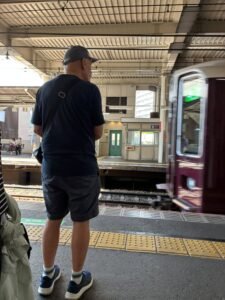
We had a slow start to the day. Nana had decided she would show us a different part of Osaka, using multiple trains to get there. We have been avoiding the center of Osaka, having seen flashing neon signs and crowded street-food alleys on previous trips,. So we were not exactly bursting with enthusiasm when we heard Nana’s plan.
However Nana assured us that we will like Kitahama & Yodoyabashi, a station away from the bustling business center of Osaka.
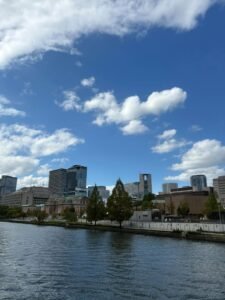
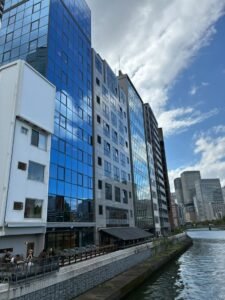
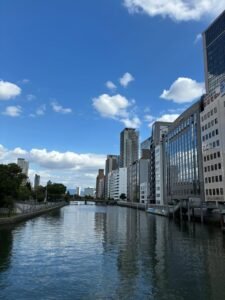
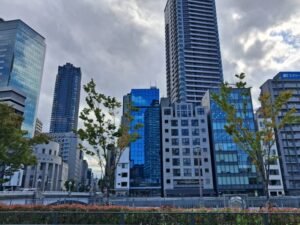
Nana was totally correct! We arrived at tree-lined streets, beautiful old stone buildings and lovely open spaces along the river. It was nothing like the Osaka we had experienced before. There was a relaxed, almost European feel to the area, with little cafés and people simply enjoying being outside.
Historically, central Kitahama and Semba sustained far less destruction during World War II air raids than other downtown quarters, allowing dozens of historical landmarks to survive in vibrant, active use.
What really surprised us was how quiet it was. The main road had four lanes running through the middle, with extra lanes on either side, yet there was hardly any traffic noise. Maybe the electric cars had something to do with it, but whatever the reason, the lack of noise made the whole area feel incredibly peaceful.
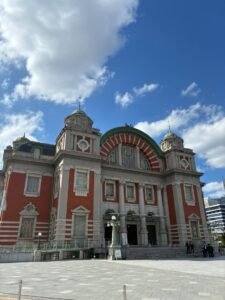
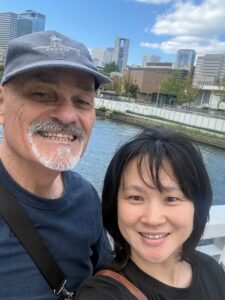
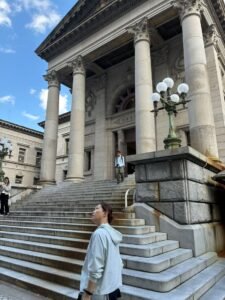
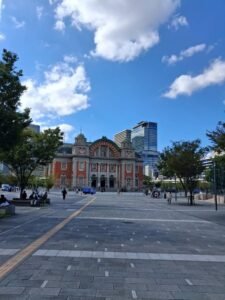
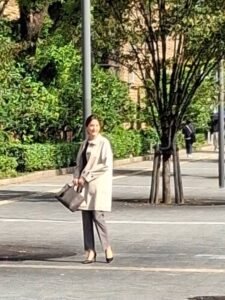
As we crossed a beautiful old bridge that spans the Tosabori River, we arrived in Nakanoshima, an area of lush greenery and water, dotted with famous modern buildings, including the Bank of Japan Osaka Branch, the Osaka Prefectural Nakanoshima Library, and the Osaka Central Public Hall. We took lots of photos as we walked and a video to show how quiet it was. Rob even got behind people doing a fashion photo shoot and took some shots of the model posing. Cheeky boy!!
I don’t know how we missed this place in previous visits, as it’s a popular spot that blends history dating back to the Edo period, also known as the Tokugawa period. This is the period between 1600 and 1868. The history of this time tells us that Japan was under the rule of the Tokugawa Shogunate. Shogun!
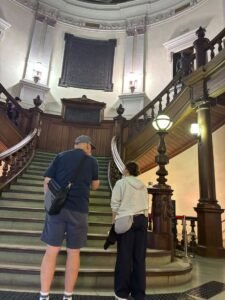
The Osaka Central Public Hall, which is a historic Neo-Renaissance style building located in Nakanoshima. Construction began in 1913 with donations from Osaka citizen Iwamoto Einosuke and was completed in 1918. Since then, it has hosted operas, concerts, and lectures. It is a beautiful building, as indeed are the other heritage listed buildings and they somehow meld well with the newer modern buildings.
We really enjoyed just walking the streets, especially alongside the river. Nana’s decision to bring us here was certainly an experience we did not expect. We certainly relished this very different side to Osaka.
Osaka Prefectural Nakanoshima Library, built in 1904, is an attractive building with a retro design that has been designated an Important Cultural Property of Japan. It houses a large collection of historical documents and business-related books about Osaka.
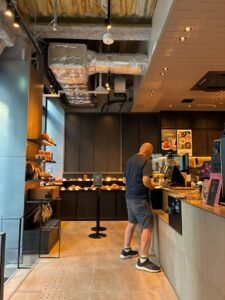
After our walk we stopped at one of our favourite places for coffee, City Bakery. It seemed that we stumbled across it, and guess what? Even this was all part of Nana’s master plan. She is amazing!
Nana left us in the cafe as she had her own mission. She went to a well known shrine, so she could make a wish for Yoshi. Yoshi has done up an old house in Shunan and has been trying to sell it for about a year, unfortunately without success. We hope Nana’s wish is fulfilled! Yoshi will be thrilled if it does.
We took multiple trains to get home, which I was quite pleased with. As I’ve said before, the train complex in Japan beats every other country I have visited. Fantastic!!
We arrived home a bit tired, but thoroughly enjoyed visiting a place like Kitahama. We hit the jackpot with this one.